
Placing a lien on a car in Pennsylvania is a legal process that can secure a debt owed to you. Whether you are a mechanic who hasn’t been paid for services, a lender, or an individual who has obtained a judgment against a vehicle owner, understanding the correct procedures is crucial. This guide provides a detailed overview of how to put a lien on a car in Pennsylvania, ensuring you navigate the complexities effectively and legally.
Understanding Car Liens in Pennsylvania
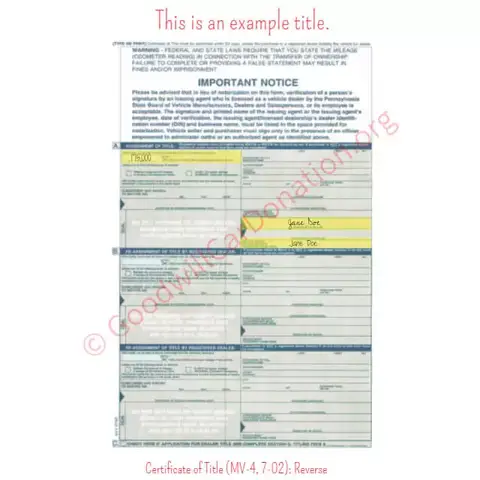
A lien is a legal claim or a right against assets, typically used as collateral to satisfy a debt. In the context of vehicles, a car lien means that the lienholder (the person or entity owed money) has a legal interest in the vehicle until the debt is paid. This prevents the vehicle owner from selling or transferring the title free and clear without the lienholder’s consent or the debt being satisfied. For anyone considering how to put a lien on a car in Pennsylvania, it’s vital to recognize the serious legal implications and the specific state laws governing these actions.
In Pennsylvania, the Department of Transportation (PennDOT) is the primary agency responsible for vehicle titling and registration, including the recording of liens on vehicle titles. However, the process of establishing the right to place a lien often originates from other legal mechanisms, such as contractual agreements or court judgments. Without a valid legal basis, you cannot simply put a lien on a car in Pennsylvania.
Why Would You Put a Lien on a Car?
There are several common scenarios where a lien might be placed on a vehicle:
- Secured Loans: This is the most common reason. When you finance a car, the lender (bank, credit union, or dealership) places a lien on the vehicle’s title. This gives them the right to repossess the car if you fail to make payments.
- Mechanic’s Liens: If a repair shop performs work on a vehicle and the owner fails to pay, the shop may be entitled to place a mechanic’s lien on the car. In Pennsylvania, these are often “possessory liens,” meaning the mechanic must retain possession of the vehicle.
- Judgment Liens: If you sue someone and win, obtaining a court judgment against them, you can sometimes place a lien on their personal property, including a vehicle, to ensure the judgment is satisfied. This is a common method for individuals seeking how to put a lien on a car in Pennsylvania when owed money for non-vehicle-related reasons.
- Storage Liens: If a vehicle is stored on private property and the owner doesn’t pay storage fees, the property owner might be able to place a lien.
Understanding the specific reason for your lien will dictate the exact legal path you need to follow. Each type of lien has distinct requirements and procedures under Pennsylvania law.
Types of Liens Applicable to Vehicles in PA

When considering how to put a lien on a car in Pennsylvania, it’s helpful to differentiate between the primary types of liens that typically involve vehicles.
Consensual Liens (Security Interests)
These are liens that the vehicle owner agrees to. The most common example is a security interest granted to a lender when a car is purchased using financing. The lender holds a lien on the title as collateral for the loan. The owner cannot legally sell the car without satisfying the loan, at which point the lien is released. While not typically initiated by an individual putting a lien on someone else’s car (unless they are a private lender), it’s important context. These liens are typically perfected by filing a UCC-1 statement or by being recorded directly on the vehicle’s certificate of title through PennDOT.
Non-Consensual Liens (Statutory or Judgment Liens)
These liens are imposed by law or court order, without the owner’s explicit agreement, usually to secure an unpaid debt. This category is most relevant for those actively seeking how to put a lien on a car in Pennsylvania to recover money.
- Mechanic’s Liens: Under Pennsylvania law (specifically 68 P.S. § 483), a mechanic or garageman who performs repairs or services on a motor vehicle at the owner’s request and is not paid has a possessory lien. This means they can hold the vehicle until the bill is paid. To sell the vehicle to recover costs, specific procedures must be followed, including proper notice to the owner and any existing lienholders. While the lien itself is possessory, the process to enforce it and eventually transfer title for sale involves PennDOT.
- Storage Liens: Similar to mechanic’s liens, if a vehicle is stored and fees are not paid, the storage facility may have a possessory lien.
- Judgment Liens: This is a powerful tool for creditors. If you obtain a monetary judgment against someone in a Pennsylvania court, that judgment can become a lien on their real estate in the county where it’s filed. For personal property, including vehicles, the process is slightly different. To enforce a judgment against personal property, a creditor often needs to execute on the judgment, which might involve a sheriff’s levy or other collection efforts that can lead to a lien being noted on a vehicle’s title.
The most common non-consensual lien an individual might actively pursue to “put on” a car (beyond mechanic’s retaining possession) is a judgment lien.
Step-by-Step Guide: How to Put a Lien on a Car in Pennsylvania (Focusing on Judgment Liens)

Since consensual liens are initiated by lenders, and mechanic’s/storage liens are often possessory in nature, this section will primarily focus on the steps for an individual or business seeking to secure a debt against a vehicle through a judgment. This process is crucial for those asking how to put a lien on a car in Pennsylvania when they are owed money.
Step 1: Obtain a Legal Judgment
Before you can place a lien on a vehicle based on an unpaid debt (that isn’t a car loan or mechanic’s bill), you must first secure a judgment against the debtor in a Pennsylvania court.
- Small Claims Court (Magisterial District Court): For debts up to $12,000, you can file a civil complaint in the Magisterial District Court where the defendant resides or where the cause of action arose. This is often a simpler and less expensive process than higher courts.
- Court of Common Pleas: For debts exceeding $12,000, or for more complex cases, you would file a civil action in the Court of Common Pleas in the appropriate county.
You will need to present evidence of the debt (contracts, invoices, emails, etc.) and convince the court that the defendant owes you money. If successful, the court will issue a judgment in your favor.
Step 2: Certify and Transfer the Judgment (if necessary)
If your judgment was obtained in a Magisterial District Court, and you want to enforce it against property in a different county or use certain enforcement mechanisms, you might need to “transcript” or transfer the judgment to the Court of Common Pleas in the relevant county.
- Magisterial District Court to Common Pleas: Obtain a certified copy of the judgment from the Magisterial District Court. File this certified judgment with the Prothonotary (the clerk of courts) in the Court of Common Pleas in the county where the vehicle owner resides or where the vehicle is located. This process is called “transcribing a judgment.” Once transcribed, it has the same force and effect as a judgment originally entered in the Court of Common Pleas.
Step 3: Identify the Vehicle and its Owner
To place a lien, you need to know:
* The full name and address of the vehicle owner (the judgment debtor).
* The vehicle’s make, model, year, and crucially, its Vehicle Identification Number (VIN).
* The current status of the vehicle’s title, including any existing lienholders.
You can often obtain vehicle information through public records, or if you have a judgment, you can use post-judgment discovery tools (like interrogatories or subpoenas) to compel the debtor to provide this information. A title search through PennDOT (Form MV-118) can reveal the current owner and any existing liens.
Step 4: Execute on the Judgment to Affect the Vehicle
Unlike real estate, where a judgment automatically creates a lien upon filing with the Prothonotary, a judgment generally does not automatically create a lien on personal property like vehicles in Pennsylvania. To secure the debt against specific personal property, you typically need to initiate execution proceedings.
- Writ of Execution: You will file a “Writ of Execution” with the Prothonotary of the Court of Common Pleas. This writ directs the Sheriff to seize the debtor’s personal property, including a vehicle, to satisfy the judgment.
- Sheriff’s Levy: The Sheriff will attempt to locate and “levy” upon (seize) the vehicle. This means the Sheriff takes legal control of the vehicle.
- Notice to PennDOT/Existing Lienholders: Once the Sheriff levies on the vehicle, steps are typically taken to ensure proper notice to PennDOT and any existing lienholders. This is critical for how to put a lien on a car in Pennsylvania effectively.
- Sheriff’s Sale: After the levy, the Sheriff will typically schedule a public auction (Sheriff’s Sale) to sell the vehicle. The proceeds from the sale are then used to satisfy the judgment.
It’s at this stage, or shortly after, that the interest in the vehicle becomes enforceable, and the existence of your judgment could be recorded or enforced through PennDOT’s title system.
The Process of Recording a Lien on a Pennsylvania Vehicle Title
While a Sheriff’s levy and sale are enforcement mechanisms, the process of formally recording a lien on a vehicle’s title with PennDOT typically applies to security interests (consensual liens) or when a new owner takes possession of a vehicle already encumbered by a lien.
For a judgment creditor, the primary goal is often to sell the vehicle to satisfy the debt, rather than merely having a lien noted on the title. However, understanding how liens are recorded is essential for anyone dealing with car ownership in PA.
- PennDOT Form MV-1 (Application for Certificate of Title): When a vehicle is purchased or transferred, the new owner (and any lienholder) completes Form MV-1. This form includes sections for designating a lienholder.
- Lienholder Information: The lienholder’s full name, address, and any specific lienholder ID are entered on the title application.
- Submission: The completed MV-1, along with the previous title (if applicable), proof of lien (e.g., security agreement, or documentation related to a sheriff’s levy), and applicable fees, is submitted to PennDOT.
- New Title Issuance: PennDOT will then issue a new Certificate of Title that lists the lienholder. This title typically remains with the lienholder or is held electronically by PennDOT until the lien is satisfied.
For a judgment lien, rather than directly filling out an MV-1 as a lienholder, your process will involve the Sheriff’s office and possibly an order from the court to ensure your interest is recognized for the purpose of a sale. The concept of how to put a lien on a car in Pennsylvania for a judgment creditor is more about enforcing the judgment against the vehicle leading to its sale, rather than merely being listed as a lienholder in the same way a bank is.
UCC Filings and Vehicle Liens
For certain types of security interests in personal property (including some vehicles, particularly those used as business collateral), a Uniform Commercial Code (UCC) financing statement might be filed with the Pennsylvania Department of State. While a UCC filing perfects a security interest, for titled vehicles, the primary method of perfecting a lien (making it publicly known and enforceable against third parties) is by notation on the vehicle’s certificate of title by PennDOT. However, it’s good to be aware that some complex situations might involve both.
Enforcing the Lien: What Happens Next?
Once you have established a lien, the ultimate goal is usually to recover the debt. The enforcement process varies by lien type.
- For Consensual Liens (Lenders): If the borrower defaults, the lender has the right to repossess the vehicle. After repossession, the vehicle is typically sold at auction, and the proceeds are used to cover the outstanding debt. Any surplus would go to the borrower, while any deficit might still be owed by the borrower.
- For Mechanic’s/Storage Liens (Possessory): If the bill remains unpaid, the mechanic or storage facility can initiate a process to sell the vehicle. This requires strict adherence to Pennsylvania’s abandoned vehicle laws, including proper notice to the owner and any known lienholders, often involving certified mail and public advertisements. After the sale, the proceeds cover the owed amount, with any remainder going to the owner.
- For Judgment Liens (Sheriff’s Levy & Sale): As detailed above, the Sheriff conducts a sale of the vehicle. The proceeds are distributed in a specific order: first, to cover the costs of the sale and sheriff’s fees; then to any prior perfected lienholders; and finally, to satisfy your judgment. If there’s a surplus, it goes to the debtor; if there’s a deficit, the remainder of your judgment against the debtor remains outstanding. This is the most direct method to collect on an unpaid debt when trying to understand how to put a lien on a car in Pennsylvania to get paid.
Release of the Lien
When the debt secured by the lien is fully paid, the lienholder is legally obligated to release the lien.
- For Lenders: The lender will send a lien release form (or a signed title indicating the lien has been satisfied) to PennDOT or directly to the vehicle owner. PennDOT will then issue a new title without the lienholder’s name.
- For Judgment Liens: After a Sheriff’s sale satisfies your judgment, the court records will reflect the satisfaction. If the vehicle was directly titled with a judgment lien (less common than a sale), you would need to file a satisfaction of judgment with the Prothonotary.
For vehicle owners, it’s crucial to ensure that once a debt is paid, the lien is officially removed from their title. Failure to do so can create issues when selling the vehicle or proving clear ownership.
Important Considerations and Legal Advice
Navigating the process of how to put a lien on a car in Pennsylvania can be complex and requires a meticulous approach to avoid legal pitfalls.
- Statute of Limitations: Be aware of the time limits for bringing lawsuits and enforcing judgments. If you wait too long, you may lose your right to collect the debt or place a lien.
- Priority of Liens: If there are multiple liens on a vehicle, the order in which they are recorded (or “perfected”) typically determines priority. A first lienholder generally has the first right to proceeds from a sale. You must determine if any senior liens exist before pursuing a new lien.
- Existing Liens: A vehicle may already have one or more liens, especially if it was financed. A title search through PennDOT is essential to identify existing lienholders. Any new lien you place would typically be subordinate to pre-existing, properly perfected liens.
- Valuation: Assess the vehicle’s value. If the car is worth less than the existing liens or the costs of enforcing your lien, it might not be a practical recovery method. For information on assessing vehicle condition or valuing cars, resources like maxmotorsmissouri.com can offer insights into general automobile knowledge and tips.
- Legal Counsel: Given the intricacies of Pennsylvania lien laws, it is highly recommended to consult with an attorney specializing in debt collection or property law. A lawyer can guide you through the process, ensure all legal requirements are met, and represent your interests in court if necessary. Attempting to place or enforce a lien without proper legal guidance can lead to costly mistakes and may not yield the desired outcome.
- Accuracy of Information: Ensure all information, from the debtor’s name to the vehicle’s VIN, is absolutely accurate. Errors can invalidate your lien.
Placing a lien on a car is a serious legal action. It involves specific forms, adherence to state statutes, and potentially court proceedings. Understanding the different types of liens, the legal steps required to establish and enforce them, and the role of agencies like PennDOT is essential for anyone learning how to put a lien on a car in Pennsylvania. Always prioritize legal counsel to ensure compliance and maximize your chances of success in recovering owed funds.
Last Updated on October 17, 2025 by Cristian Steven
